
The Race Is Two Minutes. Most Bettors Are Already Wrong Before the Gate Opens.
Every year, millions of people bet the Kentucky Derby the wrong way.
They back the favorite. They throw $20 on a trifecta and act surprised when it doesn’t hit. And for two minutes — the most wagered-on two minutes in American sports — they watch their money disappear into the crowd noise at Churchill Downs.
It doesn’t have to go that way.
The 2026 Kentucky Derby is running on Saturday, May 2, 2026, at Churchill Downs in Louisville, Kentucky.
Post time is approximately 6:57 PM ET. The day’s undercard begins at 10:30 AM ET, with the Kentucky Oaks (the fillies’ race) taking place the Friday prior on May 1.
Where to watch the 2026 Kentucky Derby:
NBC and Peacock carry the national broadcast. Coverage begins at 2:30 PM ET on race day, with the full undercard and buildup leading into the main event. You can also stream live via NBC Sports or Peacock with a subscription.
You can view updated 2026 Kentucky Derby morning-line odds and live race-day odds at Lucky Rebel, with full field and horse information available at Equibase, the official data provider for North American thoroughbred racing.
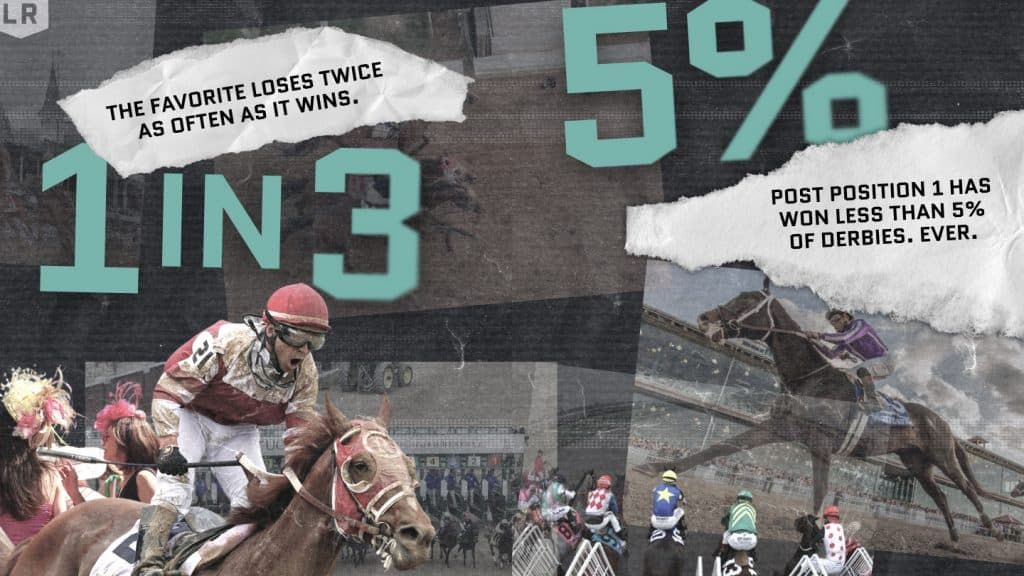
1. The Favorite Wins Only 1 in 3 Kentucky Derbies
Stat: 1 in 3
This is the one that should stop most bettors cold.
Despite drawing 30–40% of the entire wagering pool every year, the betting favorite loses the Kentucky Derby twice as often as it wins. That means the horse your entire office pool is loading money onto has a worse-than-coin-flip chance of crossing the wire first. The Derby’s own historical results back it up — go back as far as you want, the pattern holds.
The math is punishing. When a horse attracts that much money, the odds compress — so even when the favorite does win, the payout barely covers the bet. You’re taking on significant risk for minimal reward.
→ Compare current 2026 Derby odds before you decide.
Where Your Horse Starts Matters More Than You Think
Stat: Less than 5% of Derby winners have come from Post Position 1
Post position 1 sounds like an advantage. You’re on the inside. You have the shortest path to the first turn.
You also have 19 other horses crashing toward that same corner at full speed.
Historical data shows that posts 5 and 6 have produced the most Derby winners in race history. The inside post is statistically one of the worst places to break from in this particular race. The field is too large, the first turn comes too fast and horses drawn to the inside frequently get boxed in, bumped or forced wide trying to escape traffic.
When you’re looking at the 2026 Derby field, post position belongs in your handicapping conversation — not as the only factor, but as a real one.
3. Over $200 Million Gets Bet on a Single Two-Minute Race
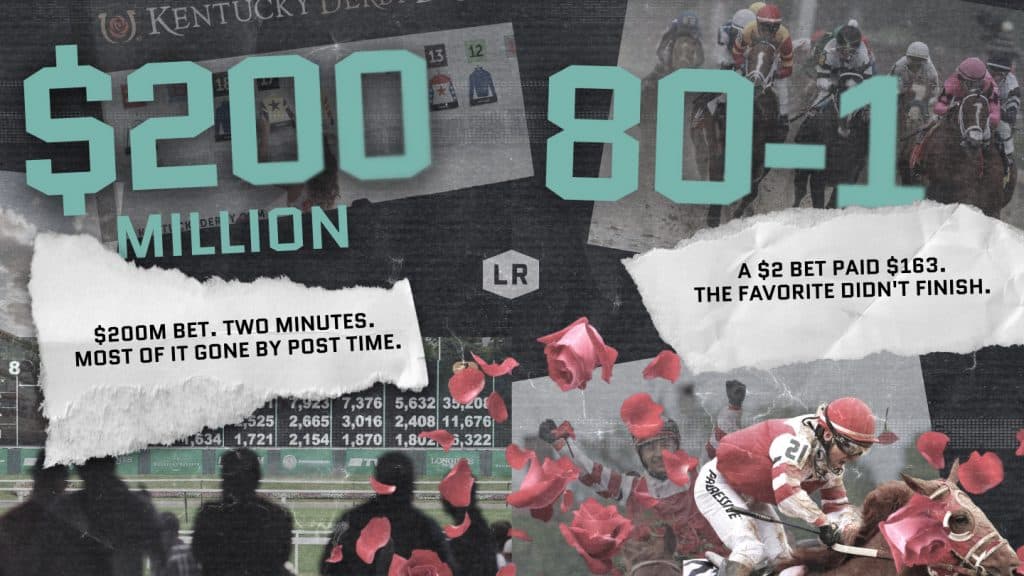
Stat: $200M+ wagered annually
The Kentucky Derby is not just a horse race. It’s the single largest pari-mutuel betting event in North America, with handle consistently exceeding $200 million on race day alone.
Here’s what that number means for you as a bettor: 80% of that money arrives on race day, meaning the morning-line odds you see on Monday are not the odds you’ll see at post time Saturday. The pools shift dramatically in the final hour as sharp money, syndicate bets and last-minute public money all flood in at once.
If you’re betting the Derby, the time to look at odds is right before post — not days before. The line moves and it moves hard.
4. The Longest Shots Have Won a Quarter of Derbies Since 2000
Stat: 80-1 — Rich Strike, 2022
In 2022, Rich Strike was an 80-1 longshot who wasn’t even on the field’s radar. He was only added to the field a day before. He paid $163.60 on a $2 bet — the second-largest upset in Derby history.
That’s an extreme case, but it isn’t an isolated one.
Since 2000, horses going off at 15-1 or higher have won roughly 25% of Kentucky Derbies. One in four. A horse the public largely dismissed took home the garland of roses.
Longshots in the Derby aren’t flukes. They’re a structural feature of a 20-horse race run at 1¼ miles with a chaotic first quarter-mile. The data supports including at least one longer-priced horse in your exotics — not because you’ll always win, but because the payouts when you do reflect the actual complexity of the race.
5. The Top Two Favorites Finish 1-2 Only About 15% of the Time
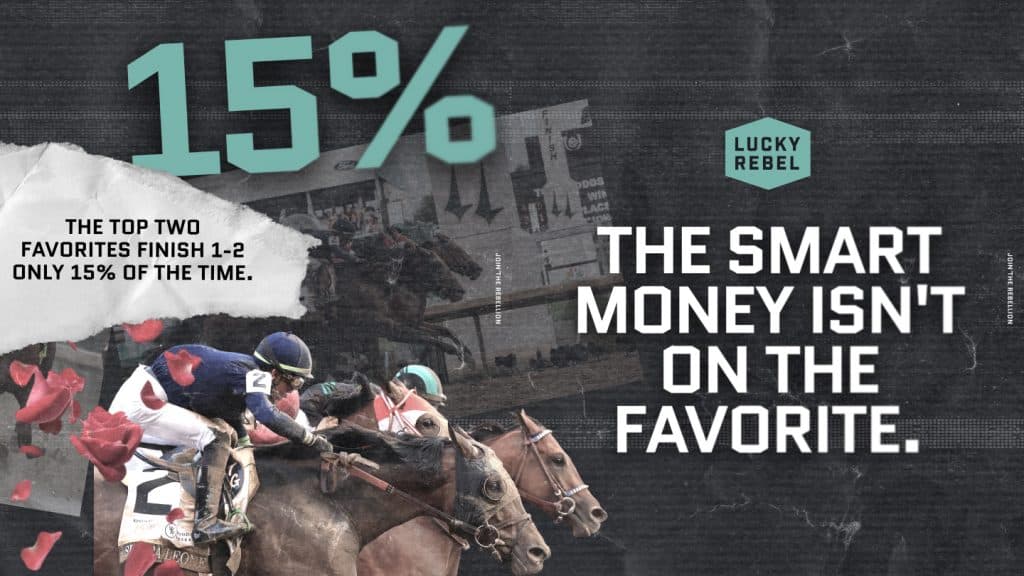
Stat: 15%
The exacta — picking the first two finishers in order — seems straightforward when you’re staring at two horses that dominate the morning line.
It almost never lands the way bettors expect.
According to Daily Racing Form Derby Archives, the top two favorites in the Derby finish first and second in the exact order only around 15% of the time. That’s why Derby exactas, trifectas and superfectas routinely pay hundreds, sometimes thousands of dollars. The public overvalues obvious combinations and the pool rewards anyone willing to think differently about the order of finish.
The Derby is a race where being slightly wrong about the favorite costs you nothing — and being slightly right about a longshot in your exotic can pay a month’s rent.
Source: Daily Racing Form
→ Explore 2026 Derby exotic bet options and current odds
The Bottom Line Before the 2026 Kentucky Derby
The smartest Kentucky Derby bettors aren’t the ones who know the horses best. They’re the ones who understand the market — where the money is wrong, where the public is lazy and where a 20-horse field creates chaos that no favorite is immune to.
The 2026 Kentucky Derby is Saturday, May 2. Post time is ~6:57 PM ET on NBC and Peacock.
You’ve got time to do this right.
→ View full 2026 Kentucky Derby field, odds and betting options.